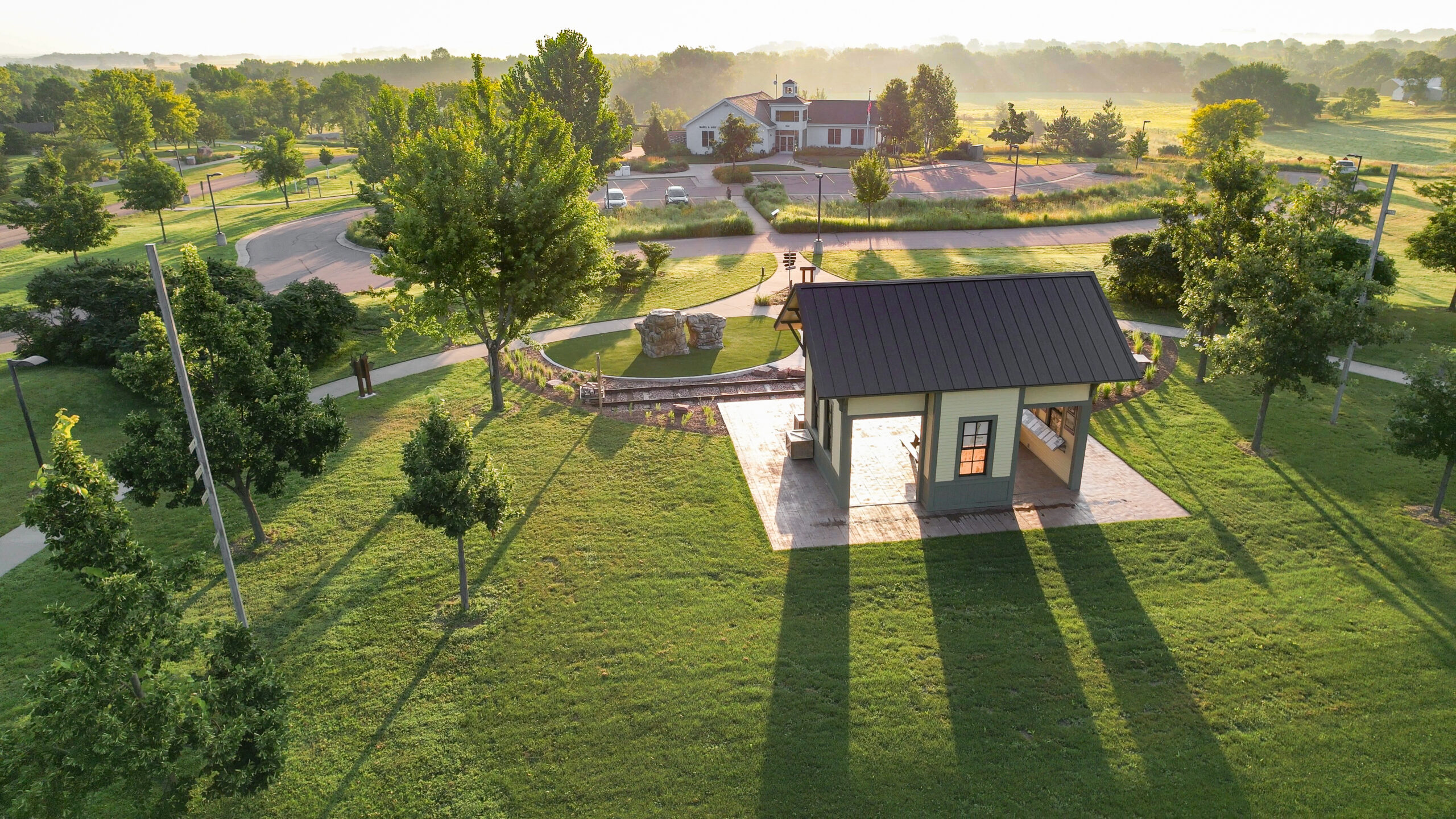
Sioux Falls, SD (2023)
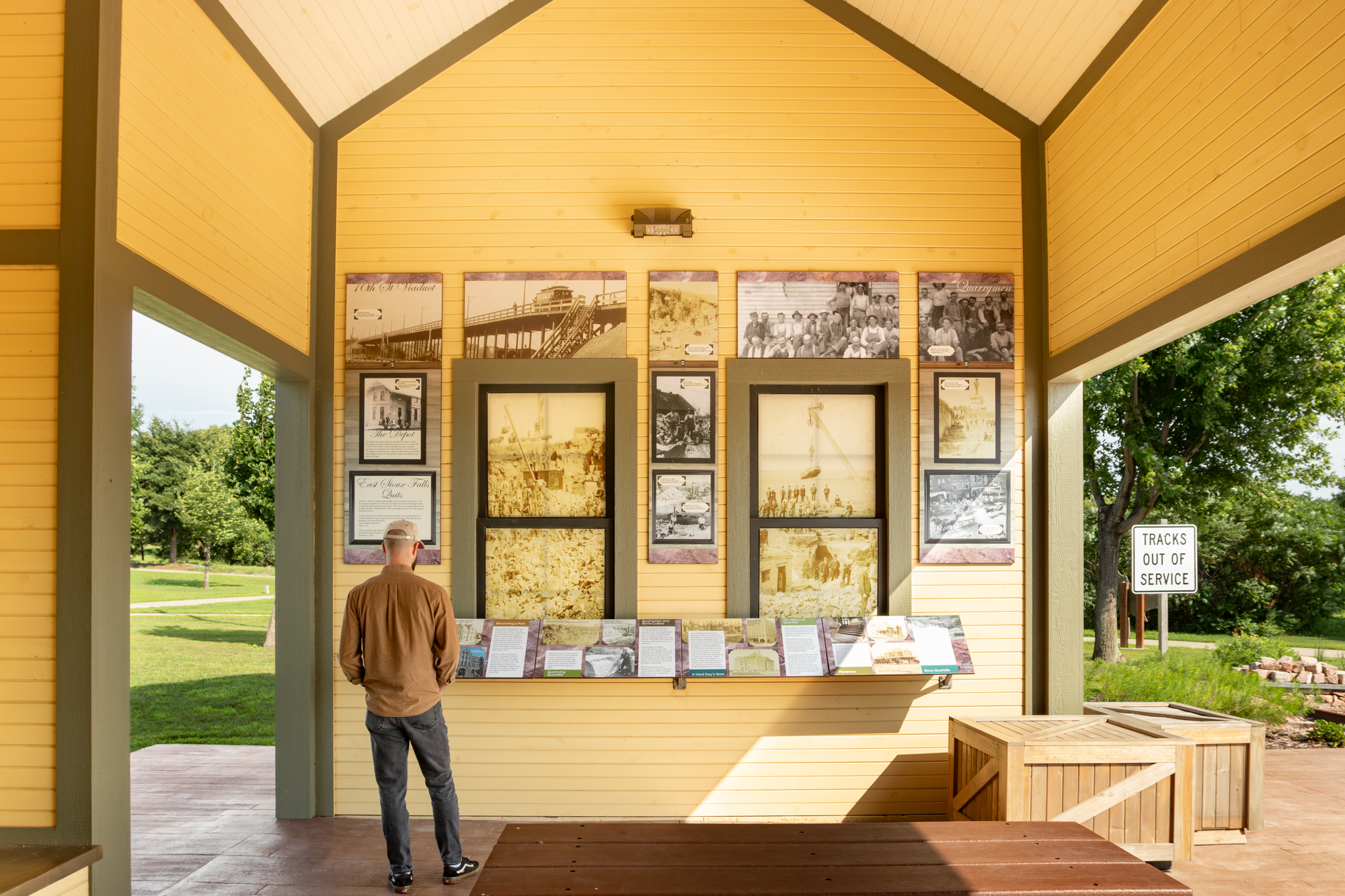
These walls can talk. If you find yourself east of Sioux Falls, humming along Arrowhead Parkway, and you’ve got the time and the itch to take in some nature and history, they’ll tell you stories about how Sioux Falls gained the early momentum it needed to become the thriving city it is today.
These walls will take you back to 1887, when the Sioux Falls Granite Company opened four quarries six miles due east of Downtown Sioux Falls in the Split Rock Township. The area boasted an abundance of Sioux Quartzite along the bluffs overlooking the Big Sioux River. Much of the quartzite was already exposed, making mining a no-brainer. Early excavation proved the stone to be significantly harder than most known building materials at the time, so demand skyrocketed. Workers and their families settled in a town then called Ives near the quarries.
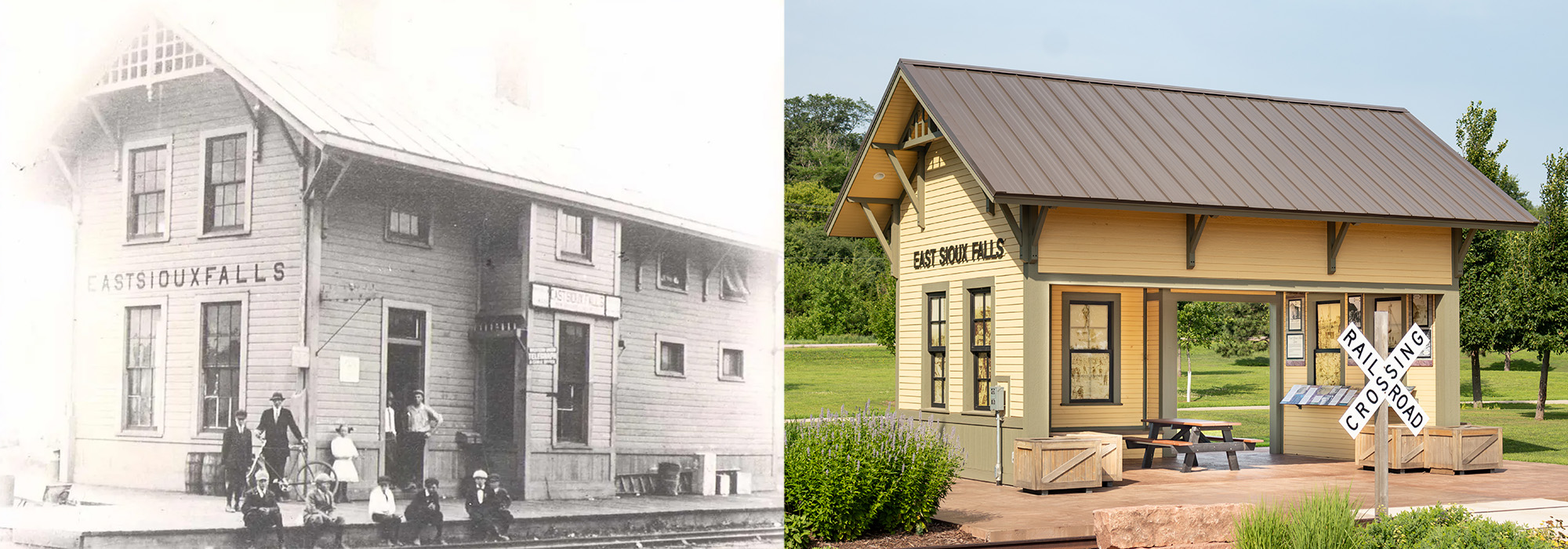
In 1888, Sioux Falls officials convinced the Illinois Central Railroad to extend its line west from Iowa through Sioux Falls and beyond. Railroad officials agreed, and due to the ongoing mining at the Split Rock Quarries, opted to pass the line through the area and establish a depot. So, the East Sioux Falls Depot was born. As was East Sioux Falls, formerly Ives, at least according to the history books.
With the depot in action, quartzite was sent expediously to Sioux Falls for downtown buildings like the Old Courthouse Museum, the Federal Courthouse (built as the Post Office), R.F. Pettigrew’s home, and, appropriately, the Illinois Central Depot. Sioux Quartzite was foundational to the establishment of Sioux Falls, and its longevity continues to benefit the city’s identity.
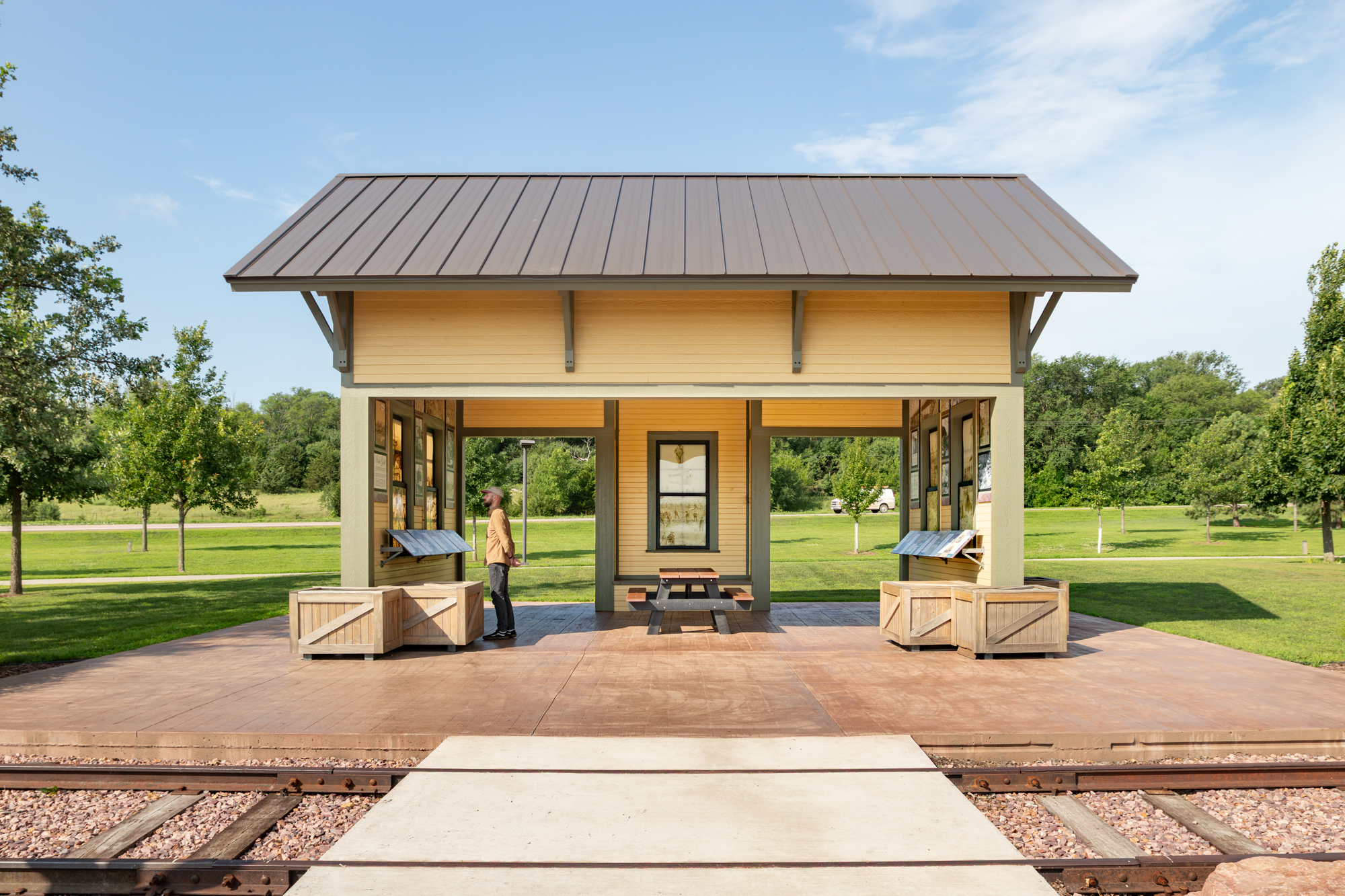
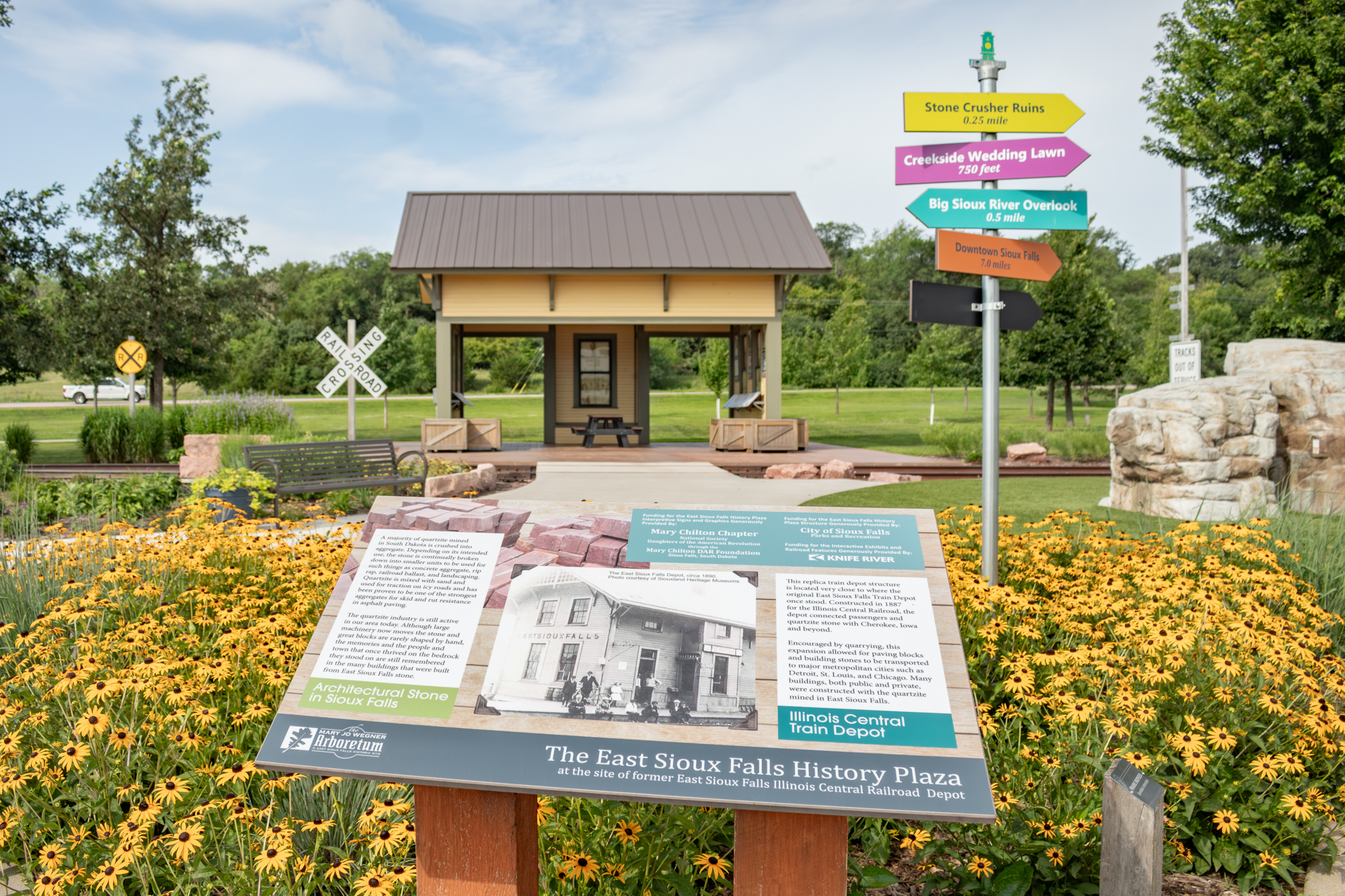
We felt that the East Sioux Falls Depot should be celebrated for its lasting contribution to Sioux Falls. And, fortunately, the site of that old depot sits on the Perry Nature Area, on the front lawn of the Mary Jo Wegner Arboretum. The essence and even some of the finer details of the original building are replicated, but we felt that opposite sets of large openings would encourage more traffic into the space than an enclosed building while offering views to other parts of the park. As a complement to the site, the indoor/outdoor structure promotes meandering yet serves as a place to pause.